










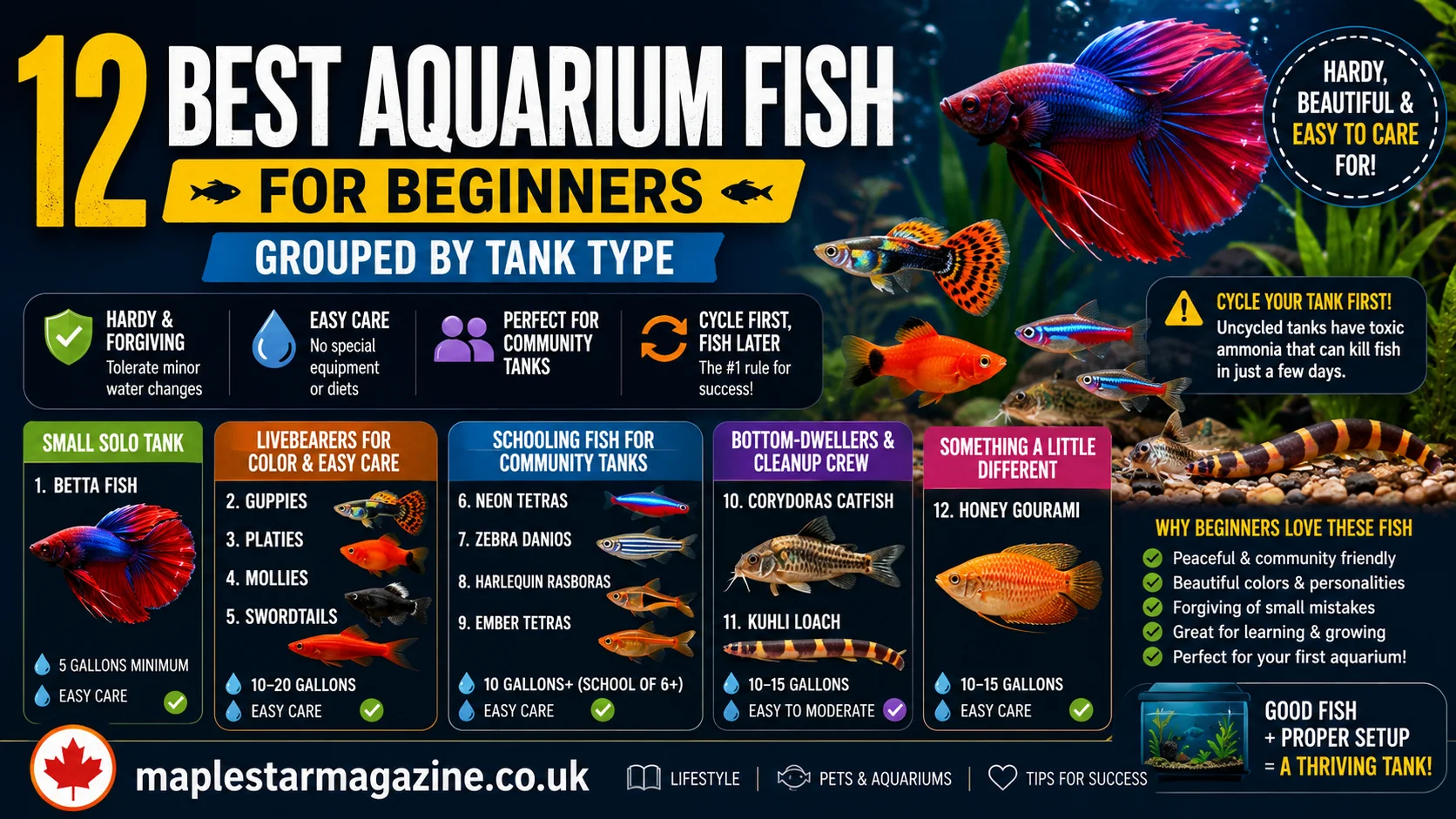
Most beginner fish do not die from a bad food choice or the wrong decoration. They die because their tank was never properly cycled before fish went in, which is the single most common and most avoidable mistake in the entire hobby. The best aquarium fish for beginners are the ones that forgive small mistakes while you learn, not necessarily the flashiest fish on the store wall.
This guide from our lifestyle desk groups 12 beginner-friendly freshwater fish by tank type, with real tank size needs and care levels, so your first setup starts on solid ground.
Table of Contents
What Makes a Fish Good for Beginners?
Good beginner fish share three traits: they tolerate minor fluctuations in water quality, they do not require specialized equipment or diets, and they stay a manageable size in a small to medium tank. Hardiness matters more than color or price when choosing the best aquarium fish for beginners.
Nearly every genuinely bad beginner experience traces back to skipping the nitrogen cycle, the process where beneficial bacteria build up in a tank’s filter to convert toxic ammonia from fish waste into safer nitrate. Fish added before this bacteria colony establishes are swimming in their own toxic waste, regardless of how hardy the species is.
Best for a Small Solo Tank
If space is limited, this is where every list of best aquarium fish for beginners should start.
1. Betta Fish
Vivid color, a strong personality, and genuinely simple care requirements make the betta the most recommended solo beginner fish. They do not need a large group or elaborate filtration, and a 5-gallon tank with a gentle filter is enough for one to thrive.
Tank size: 5 gallons minimum Care level: Easy Note: Aggressive toward other bettas, keep only one per tank
Best Livebearers for Color and Easy Care
Livebearers consistently rank among the best aquarium fish for beginners because they reproduce easily and tolerate a wide range of conditions.
2. Guppies
Guppies tolerate a wide range of water conditions and come in an enormous range of colors and tail shapes. They breed easily, sometimes too easily, which makes them a genuinely forgiving choice for a first community tank.
Tank size: 10 gallons Care level: Easy
3. Platies
Peaceful, hardy, and tolerant of a wide pH range, platies handle minor water quality fluctuations better than most beginner fish, which makes them especially forgiving during the first few months of tank ownership.
Tank size: 10 gallons or larger Care level: Easy
4. Mollies
Slightly larger and more active than guppies or platies, mollies add noticeable movement to a tank and tolerate a wide range of water conditions, though they appreciate a bit more swimming space and stronger filtration.
Tank size: 15–20 gallons Care level: Easy
5. Swordtails
Named for the male’s elongated tail fin, swordtails are active, colorful, and just as forgiving as their livebearer relatives, making them a natural addition to a beginner community tank.
Tank size: 15–20 gallons Care level: Easy
Best Schooling Fish for a Community Tank
A proper school of any of these four adds motion and color without the aggression that can complicate a first community tank.
6. Neon Tetras
A classic choice for good reason, neon tetras are small, peaceful, and strikingly colored when kept in a proper school of six or more, which also keeps them calmer and less stressed.
Tank size: 10 gallons, school of 6+ Care level: Easy
7. Zebra Danios
Fast, active, and extremely hardy, zebra danios tolerate temperature swings better than most tropical fish, making them one of the most forgiving schooling species for a tank still finding its temperature stability.
Tank size: 10 gallons, school of 6+ Care level: Easy
8. Harlequin Rasboras
Peaceful and visually striking with a distinctive black triangular marking, harlequin rasboras school tightly and add movement without any aggression toward tankmates.
Tank size: 10 gallons, school of 6+ Care level: Easy
9. Ember Tetras
A smaller, warm-orange alternative to neon tetras, ember tetras are just as hardy and work especially well in smaller community tanks where a full-size schooling fish would feel cramped.
Tank size: 10 gallons, school of 6+ Care level: Easy
Best Bottom-Dwellers and Cleanup Crew
Rounding out the best aquarium fish for beginners with a bottom-dweller adds activity at every level of the tank, not just near the surface.
10. Corydoras Catfish
Peaceful bottom-dwellers that scavenge leftover food and add genuine personality to a tank, corydoras do best in a small group of their own species rather than kept alone.
Tank size: 10 gallons, group of 3+ Care level: Easy
11. Kuhli Loach
An eel-like, nocturnal bottom-dweller, kuhli loaches are hardy and interesting to watch once they settle in, though they appreciate hiding spots and a soft substrate over sharp gravel.
Tank size: 15 gallons Care level: Easy to moderate
Best for Something a Little Different
12. Honey Gourami
A calmer, less territorial alternative to some other gourami species, honey gouramis bring soft color and a relaxed temperament to a peaceful community tank, and they tolerate typical beginner water conditions well.
Tank size: 10–15 gallons Care level: Easy
A Real Example: The Tank That Failed in Week One
A common story among new fishkeepers involves setting up a tank, filling it with water and a handful of hardy fish on the very same day, and losing several fish within a week. The fish were not the problem. An uncycled tank has no established bacteria to process ammonia from fish waste, so ammonia builds to toxic levels within days regardless of how forgiving the species is. Waiting several weeks, or using a fishless cycling method before adding any fish, is the single change that turns this common failure into a stable, thriving tank.
This story repeats often enough in fishkeeping forums that it has become something of a rite of passage, and it explains why so many guides to the best aquarium fish for beginners spend as much time on the nitrogen cycle as they do on the fish themselves. Species selection genuinely matters less than most beginners assume walking into a pet store for the first time.
Quick Reference: All 12 Fish at a Glance
| Fish | Minimum Tank Size | Care Level |
| Betta | 5 gallons | Easy |
| Guppies | 10 gallons | Easy |
| Platies | 10 gallons | Easy |
| Mollies | 15–20 gallons | Easy |
| Swordtails | 15–20 gallons | Easy |
| Neon Tetras | 10 gallons | Easy |
| Zebra Danios | 10 gallons | Easy |
| Harlequin Rasboras | 10 gallons | Easy |
| Ember Tetras | 10 gallons | Easy |
| Corydoras Catfish | 10 gallons | Easy |
| Kuhli Loach | 15 gallons | Easy to moderate |
| Honey Gourami | 10–15 gallons | Easy |
A new hobby deserves a bit of daily structure while you learn the ropes. Our guide on how to stay motivated every day covers the same consistency habits that keep a new tank’s maintenance routine from slipping after the first exciting month.
Analysis and Insights
The counterintuitive insight in the fishkeeping hobby is that the fish matter far less than most beginners assume, and the water chemistry matters far more. Two identical bettas, one in a properly cycled tank and one in an uncycled tank filled the same week, face completely different survival odds despite being the exact same species. Any list of the best aquarium fish for beginners are genuinely useful, but they solve only half the actual problem. The other half is entirely about patience during setup, not fish selection at all.
One honest limitation: even the hardiest fish on this list can struggle in a tank with poor maintenance habits, inconsistent feeding, or severe overcrowding. Hardy means forgiving of minor mistakes, not immune to neglect, and treating any fish as low-maintenance in an absolute sense sets up unrealistic expectations.
Practical Recommendations Before You Buy Fish
Choosing well from a list of the best aquarium fish for beginners is only half the job. These six habits cover the other half.
1. Cycle the Tank Before Adding Any Fish
Run the tank with filtration for several weeks, or use a fishless cycling method with a bottled ammonia source, before introducing fish. This single step prevents more early fish loss than any species choice.
2. Test Water Parameters, Do Not Guess
A basic liquid test kit for ammonia, nitrite, and nitrate costs little and removes the guesswork of whether your tank is actually ready for fish.
3. Add Fish Gradually, Not All at Once
Introducing a full stock of fish on day one overwhelms even a properly cycled tank’s bacteria colony. Add a few fish at a time over several weeks instead.
4. Match Tank Size to Your Actual Fish List
Decide roughly which fish you want before buying a tank, since a 5-gallon tank suits a single betta but leaves no room for a proper school of tetras or a group of corydoras.
5. Keep Schooling Fish in Real Groups
Tetras, danios, and rasboras kept alone or in pairs show more stress and hide more often than the same species kept in a proper group of six or more.
6. Research Before You Buy, Not After
Confirm adult size, temperament, and specific water needs before a fish comes home, rather than discovering incompatibilities with existing tankmates after the purchase.
Frequently Asked Questions
| Q: What are the best aquarium fish for beginners? A: The best aquarium fish for beginners include bettas, guppies, platies, mollies, neon tetras, and corydoras catfish, since they tolerate minor water quality fluctuations and require no specialized equipment. |
| Q: What is the easiest fish to keep in a small tank? A: The betta is widely considered the easiest fish for a small tank, thriving alone in as little as 5 gallons without needing a group or elaborate filtration. |
| Q: Do beginner fish still need a cycled tank? A: Yes. Even the hardiest beginner fish can be harmed or killed by ammonia and nitrite buildup in an uncycled tank. Cycling the tank before adding fish matters more than which species you choose. |
| Q: How many fish should a beginner start with? A: Start with a small number of hardy fish, added gradually over several weeks, rather than fully stocking a tank on day one. This gives the tank’s bacteria colony time to keep pace with waste production. |
| Q: What is the nitrogen cycle in an aquarium? A: It is the process where beneficial bacteria convert toxic ammonia from fish waste into nitrite and then into much less harmful nitrate. A tank needs this bacteria colony established before it can safely support fish. |
| Q: Can beginner fish live together in the same tank? A: Many can. Guppies, platies, mollies, tetras, and corydoras are commonly kept together in peaceful community tanks, though bettas usually need to be the only betta in the tank. |
| Q: What size tank is best for a first-time fishkeeper? A: A 10-gallon tank is a common, practical starting point, offering more stability and forgiveness than very small tanks while still fitting comfortably in most homes. |
Conclusion
The best aquarium fish for beginners are defined by hardiness and forgiveness, not color or price. Match your fish to your tank size and social needs, respect the nitrogen cycle before adding anyone, and add fish gradually rather than all at once. Any of the 12 fish covered here can anchor a genuinely successful first tank when the setup itself gets the same care as the species choice.
- Bettas are the easiest choice for a small solo tank
- Guppies, platies, mollies, and swordtails are the most forgiving livebearers for a community tank
- Neon tetras, zebra danios, and harlequin rasboras all need real schools of six or more
- Cycling the tank before adding fish matters more than which species you choose
- Add fish gradually over several weeks rather than stocking a tank all at once
Which group fits your first tank best: a solo betta, a colorful livebearer community, or a proper school of tetras? Tell us in the comments what you are setting up.

The Maple Star Magazine editorial team is responsible for the accuracy, structure, and publishing standards that every article on this site is held to. This includes verifying sources before publication, maintaining consistency across our Travel, Technology, Lifestyle and revisiting published guides as facts, pricing, or industry standards change. Content published under this byline reflects collaborative editorial work rather than a single author's individual reporting.