






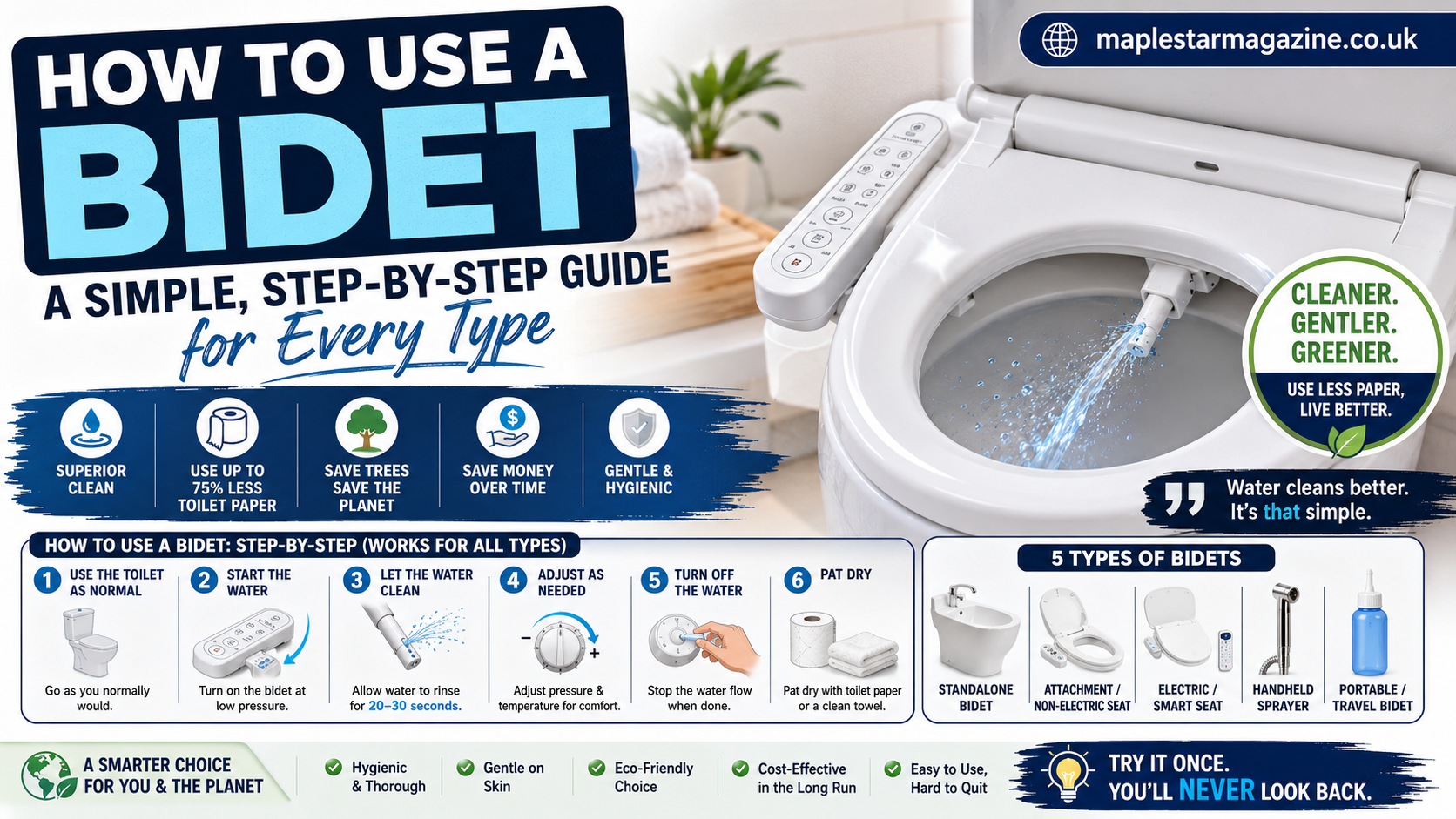
Americans go through roughly 36.5 billion rolls of toilet paper a year, a habit that pulps about 15 million trees annually, according to Scientific American. A growing number of US households are switching to a fixture most of the world has used for decades. How to use a bidet is simpler than it looks, and the learning curve usually takes about one try. Once you know how to use a bidet, going back to paper alone tends to feel like the odd choice, not the other way around.
This guide from our lifestyle desk walks through every common bidet type, step by step, so your first time is comfortable rather than confusing.
Table of Contents
What Is a Bidet and How Does It Work?
A bidet is a bathroom fixture or attachment that cleans you with a stream of water instead of, or alongside, toilet paper. Every version works on the same basic idea: water rinses the area after using the toilet, then you pat dry, which most users find gentler and more thorough than paper alone.
Bidets come in five common forms in US homes: standalone fixtures, seat attachments, electric smart seats, handheld sprayers, and portable travel bottles. The core motion is nearly identical across all five. Only the controls and setup differ.
Knowing how to use a bidet really means knowing two things: how your specific type turns the water on, and how to adjust pressure and temperature to something comfortable. Everything else, positioning, timing, drying, stays the same no matter which type sits in your bathroom.
How to Use a Standalone Bidet
A standalone bidet is a separate, low fixture next to the toilet, common in older homes and many European bathrooms. If this is the type in your bathroom, here is how to use a bidet like this one from start to finish.
- Use the toilet first and wipe lightly if needed
- Straddle the bidet, facing the controls for easier adjustment
- Turn on the water and adjust temperature to a comfortable warm
- Let the water clean the area, using your hand if needed, for about 20 to 30 seconds
- Turn off the water, pat dry with a towel or toilet paper, then rinse the bowl and wash your hands
How to Use a Bidet Attachment or Non-Electric Seat
This is the most common type in US homes: a slim attachment that mounts under your existing toilet seat, controlled by a knob or lever on the side. Most people learning how to use a bidet for the first time start with exactly this type.
- Use the toilet as normal and remain seated afterward
- Reach to the side control and turn it slowly to start with low pressure
- Let the water clean for 20 to 30 seconds, adjusting pressure as needed
- Turn the control off, then pat dry with toilet paper or a dedicated towel
How to Use an Electric or Smart Bidet Seat
Electric bidet seats replace your entire toilet seat and typically add features like heated water, a heated seat, an air dryer, and remote or panel controls. Learning how to use a bidet seat like this takes slightly longer than a basic attachment, simply because there are more buttons to learn.
- Remain seated after using the toilet
- Select the wash function on the control panel or remote
- Adjust water pressure, temperature, and nozzle position to your comfort
- Use the built-in air dryer if available, or pat dry, then flush as normal
How to Use a Handheld Bidet Sprayer
Sometimes called a bidet shower or bathroom sprayer, this hose-and-nozzle attachment mounts near the toilet. It is a popular alternative for anyone who wants to use a bidet without a seat-mounted control.
- Stay seated or hover slightly, then pick up the sprayer
- Position the nozzle and open the valve slowly to control pressure
- Direct the spray to clean, adjusting angle and pressure as needed
- Close the valve, return the sprayer to its holder, and pat dry
How to Use a Portable or Travel Bidet
A small squeeze bottle with an angled nozzle, ideal for travel or homes without bidet plumbing. Knowing how to use a bidet bottle like this means you are never without the option, even on the road.
- Fill the bottle with warm water before use
- Insert the angled nozzle and squeeze gently while aiming
- Rinse thoroughly, then pat dry and refill the bottle for next time
A Real Example: A First-Timer’s Actual Experience
Most people trying a bidet attachment for the first time make the same small mistake: turning the knob too far, too fast, and getting a startling blast of cold water. The fix is almost always the same. Turn the control slowly, expect the first second of water to run cool before it warms, and start at the lowest pressure setting rather than the middle. By the second use, most first-timers report the whole process feels completely unremarkable, which is usually the actual goal.
Ask around and you will find the same story repeated with small variations: a hesitant first attempt, a moment of surprise, and then a fairly quick shift to genuine preference. Learning how to use a bidet turns out to have a much shorter learning curve than most first-timers expect walking in, which is part of why so many converts describe going back to paper-only bathrooms as the part that now feels strange.
Comparing Bidet Types
Choosing which type to learn how to use a bidet on first usually comes down to budget and whether you rent or own. The table below lines up cost, installation effort, and the best-fit household for each option.
| Type | Installation | Typical Cost | Best For |
| Standalone bidet | Professional plumbing required | $300–$1,000+ | Renovations, homes with space to spare |
| Attachment / non-electric seat | DIY, under 30 minutes | $30–$100 | Renters, quick upgrades, tight budgets |
| Electric / smart seat | DIY, replaces toilet seat | $250–$1,000+ | Full-feature comfort, heated seat and dryer |
| Handheld sprayer | DIY, mounts near toilet | $20–$60 | Small bathrooms, flexible cleaning use |
| Portable travel bidet | None | $10–$25 | Travel, camping, backup option |
A bidet fits naturally into a streamlined bathroom routine. Our guide on building a solid morning routine covers how small, repeatable habits like this one add up over a full year.
Analysis and Insights
The counterintuitive part of how to use a bidet is that the intimidation almost entirely front-loads into the first ten seconds. Every genuine complexity, water pressure, temperature, positioning, resolves itself the moment someone actually tries it rather than reads about it, which is a large part of why bidet adoption tends to spread through households one convinced family member at a time rather than through marketing alone. Once the initial hesitation clears, the actual mechanics turn out to be closer to adjusting a shower than anything genuinely technical.
One honest limitation: bidets are a hygiene upgrade, not a medical treatment, and marketing claims about eliminating infections or replacing medical care for specific conditions go further than the evidence supports. People with hemorrhoids, recent childbirth, or ongoing skin conditions should still follow their doctor’s specific guidance rather than assuming that learning how to use a bidet alone resolves an existing medical issue.
Practical Recommendations for a Comfortable First Try
1. Start With the Lowest Pressure Setting
Turn any control knob or dial slowly and begin at the gentlest setting. It is far easier to increase pressure than to recover from an uncomfortable first impression, and most people who give up on learning how to use a bidet after one bad experience simply started at too high a setting.
2. Use Warm Water When Available, Not Cold
Non-electric attachments typically pull from your existing water lines, so connecting to the warm line, if your model allows it, makes a noticeable comfort difference over a cold-only setup.
3. Pat Dry Rather Than Wipe
A gentle pat with toilet paper or a small dedicated towel avoids irritation that a full wiping motion can cause on freshly cleaned, slightly damp skin. This one detail is where most guides on how to use a bidet lose people, since old wiping habits are hard to break in the first week.
4. Clean the Nozzle Regularly
Most modern bidets self-rinse the nozzle automatically, but a quick manual wipe every week or two keeps things genuinely hygienic, especially on non-electric models without a self-cleaning cycle.
5. Check Your Home’s Water Pressure Before Buying an Attachment
Very low household water pressure can weaken the spray on non-electric attachments. Electric models with a pump handle this better if your home’s pressure runs low.
6. Talk to a Doctor About Specific Medical Situations
Postpartum recovery, hemorrhoids, or ongoing skin conditions can all benefit from a bidet’s gentler cleaning, but confirm the right pressure and approach with a doctor rather than guessing, especially in the first few weeks of recovery. A doctor can also advise on how to use a bidet safely if you have a specific wound or recent procedure to consider.
Frequently Asked Questions
| Q: How do you use a bidet step by step? A: Use the toilet first, then turn on the bidet’s water at low pressure, let it clean the area for about 20 to 30 seconds, turn off the water, and pat dry with toilet paper or a towel. This same sequence works whether you are learning how to use a bidet attachment, a standalone fixture, or an electric seat. |
| Q: Do you still need toilet paper if you have a bidet? A: Most people use a small amount of toilet paper to pat dry after using the bidet, though the amount used drops sharply compared to wiping alone, often by 75 percent or more. |
| Q: Is it normal to feel awkward using a bidet the first time? A: Yes, and it is very common. Most first-time users report the process feels completely ordinary by the second or third use, once they know what pressure and temperature feel comfortable. |
| Q: How do you use a bidet attachment that mounts under the toilet seat? A: Stay seated after using the toilet, turn the side control slowly to start the water at low pressure, let it clean the area, then turn it off and pat dry. |
| Q: Can you install a bidet yourself? A: Yes, in most cases. Bidet attachments, non-electric seats, and even many electric seats are designed for DIY installation in under an hour, without a plumber, as long as your toilet has a standard water supply valve. |
| Q: Are bidets sanitary to use? A: Yes, when used and maintained correctly. Water rinses more thoroughly than paper alone, and most bidets self-rinse the nozzle before and after each use to keep it clean. |
| Q: Do bidets save money over time? A: Yes, for most households. Lower toilet paper purchases combined with a relatively low upfront cost for attachments mean many households recover the cost within one to two years. |
| Q: What is the easiest bidet type to learn how to use? A: A bidet attachment or non-electric seat is generally the easiest for beginners, since it has a single control knob and requires no complex settings, making the learning curve shorter than an electric seat with multiple functions. |
Conclusion
How to use a bidet comes down to the same three steps regardless of which type sits in your bathroom: clean with water at a comfortable pressure, pat dry, and adjust the settings until it feels routine. The learning curve is real but short, usually resolving within a single use, and every version of this fixture, from a ten-dollar travel bottle to a full electric seat, follows that same basic pattern.
- All bidet types share the same core motion: rinse, then pat dry
- Start at the lowest pressure and warmest comfortable temperature
- Attachments and handheld sprayers are the easiest, cheapest DIY entry points
- Switching cuts toilet paper use by up to 75 percent for most households
- Bidets are a hygiene upgrade, not a substitute for medical guidance on specific conditions
Have you made the switch already, or is this your first time considering it? Tell us in the comments which type you are thinking about trying.

The Maple Star Magazine editorial team is responsible for the accuracy, structure, and publishing standards that every article on this site is held to. This includes verifying sources before publication, maintaining consistency across our Travel, Technology, Lifestyle and revisiting published guides as facts, pricing, or industry standards change. Content published under this byline reflects collaborative editorial work rather than a single author's individual reporting.