







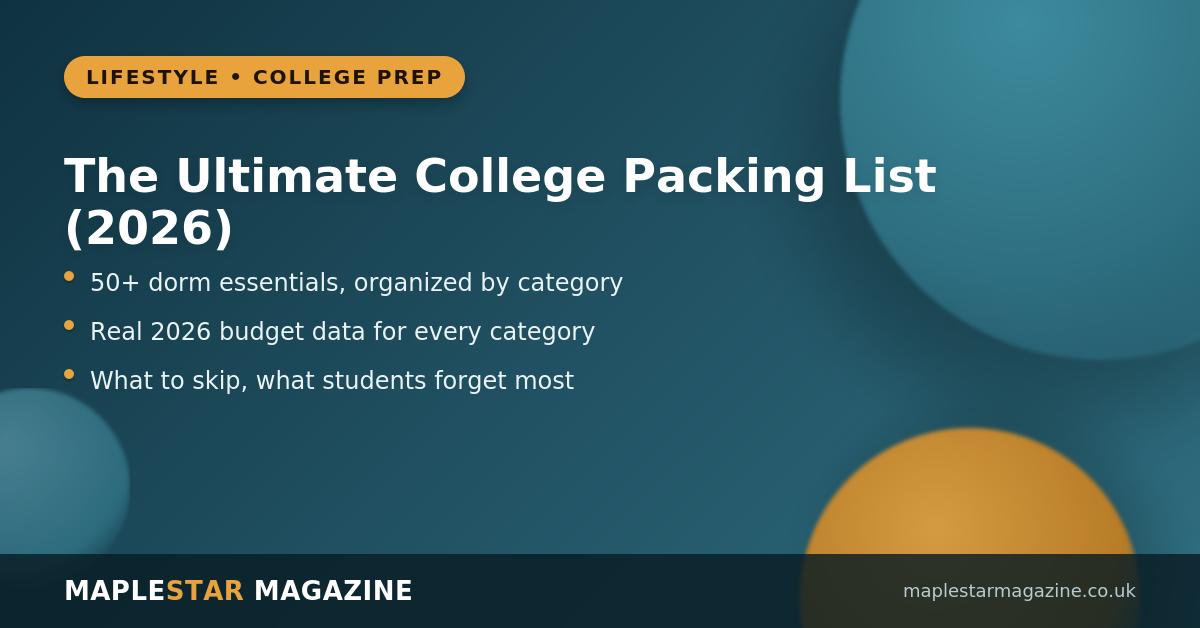
American families are on track to spend a record $103.5 billion on back-to-school shopping in 2026, and college households alone will cross $100 billion for the first time ever. A huge share of that money gets wasted on duplicate items, impulse buys, and things that never fit the dorm room. A smart college packing list fixes that before you even reach the parking lot on move-in day.
This guide from our lifestyle desk breaks the ultimate college packing list into 8 categories, backed by real 2026 spending data, so you buy what you actually need and skip what you do not.
Table of Contents
Why a Smart College Packing List Saves You Money
A good college packing list works by category, not by guesswork, and it starts with real numbers. College students and families are projected to spend an average of $1,437.79 per student in 2026, according to the National Retail Federation, up from $1,325.85 the year before. Electronics, dorm furnishings, and clothing eat up most of that budget, which means a clear checklist is the single easiest way to avoid overspending.
Below, every category includes a rough budget range so you know what is reasonable to spend before you start shopping. Think of this college packing list less as a shopping receipt and more as a planning tool: the goal is to walk into move-in day with a clear sense of what you already have, what you still need, and what can genuinely wait until you see your actual room.
Bedding and Sleep
Dorm beds almost always use a Twin XL mattress, which is longer than a standard Twin. Regular sheets will not fit, so this is the single most common first-time buying mistake.
- Twin XL fitted and flat sheets (2 sets)
- Mattress topper or pad (dorm mattresses are notoriously thin)
- Comforter or duvet, plus 2 pillows and pillowcases
- Mattress protector (waterproof, for spills and allergens)
- Blackout curtains or a sleep mask, for roommates on different schedules
Budget range: $80 to $180 for a complete bedding set.
Bathroom and Personal Care
Bathroom essentials are one of the most commonly forgotten categories on any college packing list, mostly because students assume they will figure it out once they arrive.
- Shower caddy and flip-flops (essential for shared, communal bathrooms)
- Towels: 2 bath, 2 hand, 1 washcloth
- Toiletries: toothbrush, toothpaste, shampoo, body wash, deodorant
- Basic first aid kit: pain relievers, bandages, antacids, a thermometer
- Bathroom organizer or hanging shelf, if your dorm has a private bathroom
Budget range: $78 to $155, and the first aid kit is worth every dollar at 2 a.m.
Tech and Electronics
Electronics take the single biggest slice of the average college budget, so this is the category where a clear priority list matters most.
- Laptop and charger (check your program’s specific requirements first)
- Power strip with surge protection (most dorms have very few outlets)
- Noise-canceling headphones, for shared rooms and busy libraries
- Phone charger, external battery pack, and a desk lamp
- Printer (optional, many campuses offer free or low-cost printing instead)
Budget range: $300 to $360, which tracks closely with national averages for this category.
Kitchen and Storage
Check your dorm’s specific appliance rules before buying anything with a heating element. Many schools cap wattage or ban certain items outright.
- Mini fridge (coordinate with your roommate first, see the example below)
- Microwave, if allowed, or a microwave-fridge combo unit
- Reusable water bottle, coffee mug, and basic utensils
- Under-bed storage bins and over-the-door organizers
- Command hooks and strips (most dorms do not allow nails or screws)
Budget range: $100 to $220, lower if you split a fridge and microwave with a roommate.
Study and Academic Supplies
Academic supplies are cheap compared to everything else on this list, but forgetting them creates the most first-week stress.
- Notebooks, pens, and a planner or digital calendar habit
- Backpack built for daily laptop and textbook carrying
- Desk organizer and a small filing folder for syllabi
- Sticky notes, highlighters, and a stapler
Budget range: $40 to $90 for a full semester of basic supplies.
Clothing and Laundry
Pack for the actual campus climate, not just the season you are leaving from. A laundry kit matters more than most students expect in the first month.
- Laundry bag or basket, detergent pods, and a drying rack
- Weather-appropriate layers for your specific campus region
- One formal outfit, for interviews, presentations, or events
- Comfortable walking shoes (you will walk more than you expect)
Budget range: $150 to $210, including a starter laundry kit.
Documents and Important Papers
This is the single most overlooked category on any college packing list, and the one with the highest cost if something goes missing.
- Student ID, housing assignment, and dorm key confirmation
- Health insurance card and any prescription information
- Financial aid and scholarship paperwork
- A folder or accordion file to keep everything in one place
Budget range: Under $20 for a folder system, and priceless if you ever need it fast.
Dorm Decor and Comfort
Decor is the fun category, and it is also the one most likely to get out of hand. Set a firm budget here before you start browsing.
- String lights or an LED strip for ambient lighting
- Wall art, photos, or a corkboard for personal touches
- A small rug, for comfort on cold dorm floors
- A mini disco ball or LED mirror ball for a cheap, genuinely fun accent piece that photographs well for social media
Budget range: $50 to $150, and this is the easiest category to overspend in.
A Real Example: The Duplicate Mini-Fridge Mistake
Every fall, thousands of new roommates independently buy a mini fridge, only to discover on move-in day that they now own two mini fridges and no floor space. A single text message before move-in, agreeing on who brings the fridge and who brings the microwave, solves a problem that costs real money and takes up a genuinely small dorm room. The same logic applies to vacuums, printers, and floor lamps: anything bulky is worth one quick conversation before you buy it.
This pattern shows up across almost every category on a college packing list, not just kitchen appliances. Rugs, string lights, and even shower caddies get duplicated constantly because roommates rarely talk logistics before move-in, focused instead on getting excited about the year ahead. A shared spreadsheet or group chat started even two weeks before move-in day catches most of these overlaps before they turn into wasted money and cluttered floor space.
2026 College Spending by Category
| Category | Average Spend (2026) | Notes |
| Electronics | $341.95 | Largest single category; laptop and accessories |
| Dorm or apartment furnishings | $194.00 | Bedding, storage, small furniture |
| Clothing and accessories | $182.39 | Includes weather-specific layers |
| Food | $153.91 | Snacks, meal plan supplements |
| Personal care products | $133.34 | Toiletries and bathroom essentials |
Source: National Retail Federation and Prosper Insights & Analytics, 2026 back-to-school survey of US shoppers.
Struggling to focus once classes start? Our guide on improving focus and concentration naturally pairs well with the study supplies above and covers real habits that hold up during finals week.
Analysis and Insights
The counterintuitive insight in the 2026 spending data is that the cheapest categories cause the most stress when skipped. Students consistently overspend on electronics and decor, the exciting, visible purchases, while underspending on documents and first aid, the boring categories that only matter in an emergency. A first aid kit costs less than one fast food order, yet it is the item students most often say they wish they had packed when something goes wrong at 2 a.m. and the campus health center is closed.
One honest limitation of this list: it is a baseline, not a universal answer. A student heading to a cold-climate school in Minnesota needs a genuinely different clothing category than a student heading to Florida, and some universities restrict specific items outright, from candles to certain space heaters to full-size refrigerators. Always check your specific school’s housing guidelines before finalizing any college packing list, since a restricted item bought in advance is money wasted twice: once on the purchase and once on the return shipping. For general trip and travel budgeting logic that applies just as well to a college move, our step-by-step budget trip guide covers the same category-by-category budgeting approach used here.
Practical Recommendations for Packing Smart
1. Check Your University’s Specific Dorm Restrictions First
Every school publishes a list of banned or restricted items, from candles to certain appliances. Check this before you buy anything large, not after, so you avoid paying for returns or shipping items back home.
2. Coordinate With Your Roommate Before Buying Big Items
One text message about who brings the fridge, the microwave, and the vacuum avoids the single most common and most avoidable college packing mistake.
3. Buy the Boring Categories First
Documents and first aid supplies are cheap and easy to forget in the excitement of shopping for decor and electronics. Buy them early so they are not an afterthought the week before move-in.
4. Use Packing Cubes or Vacuum Bags to Compress Clothing
Dorm closets are genuinely small. Compression bags or packing cubes let you fit a full season of clothing into far less space than folding alone allows.
5. Ship Bulky Items Instead of Flying With Them
If you are flying to campus rather than driving, shipping bedding and storage bins ahead of time is almost always cheaper than paying checked-bag fees, and it means less to carry through an airport.
6. Wait to Buy Some Decor Until You See Your Actual Room
Room layouts vary more than move-in photos suggest. Holding off on rugs, wall art, and larger decor until after you see your assigned space avoids buying something that does not fit or clashes with a roommate’s existing setup.
Frequently Asked Questions
| Q: What do students forget most on their college packing list?A: Bathroom essentials and first aid supplies are the most commonly forgotten items, largely because students assume they will figure it out once they arrive on campus. |
| Q: Do I need Twin XL sheets for a dorm bed?A: Yes, in almost every case. Dorm beds are longer than a standard Twin mattress, so regular sheets will not fit correctly. Confirm your specific bed size with your housing office if you are unsure. |
| Q: How much does it cost to pack for college in 2026?A: College students and families are projected to spend an average of $1,437.79 per student in 2026, according to the National Retail Federation, with electronics as the single largest category. |
| Q: What should I not bring to college?A: Avoid candles, certain space heaters, full-size appliances, and anything on your specific school’s restricted items list. Check your housing office’s guidelines before packing anything large or heat-generating. |
| Q: Can I buy dorm items after I arrive on campus?A: Yes. Most college towns have nearby stores, and a forgotten item is rarely a real emergency. It is often smarter to wait on large decor purchases until you see your actual room. |
| Q: Should freshmen bring a mini fridge?A: Only one per room is necessary. Coordinate with your roommate before move-in so you do not both show up with a mini fridge and no floor space left for anything else. |
| Q: How early should I start my college packing list?A: Start building your list at least a month before move-in, and buy documents, first aid, and academic supplies early since they are cheap, easy to forget, and rarely go on sale close to move-in week. |
Conclusion
A smart college packing list is not about buying more. It is about buying the right things, in the right order, without duplicating what your roommate already has. Work through each category above, set a firm decor budget, and check your school’s specific restrictions before your first purchase.
- Twin XL sheets are non-negotiable, since regular sheets will not fit a dorm bed
- Electronics take the biggest share of the average $1,437.79 college budget
- Documents and first aid are cheap, essential, and the most commonly forgotten
- One text to your roommate avoids the classic duplicate mini-fridge mistake
- Wait on major decor purchases until you see your actual assigned room
Which category are you tackling first on your own college packing list: bedding, tech, or decor? Tell us in the comments and we will help you prioritize.

The Maple Star Magazine editorial team is responsible for the accuracy, structure, and publishing standards that every article on this site is held to. This includes verifying sources before publication, maintaining consistency across our Travel, Technology, Lifestyle and revisiting published guides as facts, pricing, or industry standards change. Content published under this byline reflects collaborative editorial work rather than a single author's individual reporting.