





Introduction
Disco balls are having their biggest cultural moment in decades. The #discoball hashtag on TikTok has crossed 140 million views, search interest for disco ball party setups peaked at an index value of 100 in February 2026, and average monthly sales for mirror ball products climbed to 342 units per major retailer listing by December 2026. That is not a fleeting trend. It is a sustained shift in how Americans use light and reflective decor across parties, weddings, home interiors, and event spaces.
The challenge is that the disco ball category has expanded considerably beyond a single silver sphere hanging from a nightclub ceiling. Today you will find mini disco balls for bedroom shelves, large mirror balls built for dance venues, LED versions with remote-controlled color cycling, motorized rotating setups, and sculptural melted designs sitting on mantels as year-round art pieces. At Maple Star Magazine, we break down product and decor decisions with real data so you shop with confidence, not guesswork. This guide covers every major type of disco ball, how to size one correctly for your space, how to light it properly, and where each style fits best.
Why Disco Balls Are Back and Why They Are Staying
The disco ball was first used in ballrooms and entertainment venues as early as the 1920s, but its cultural peak came during the 1970s when clubs like Studio 54 in New York made the rotating mirror sphere synonymous with dancing, nightlife, and a specific kind of electric social energy. After the disco era faded, the mirror ball became nostalgic shorthand more than an active decor choice.
What changed is the intersection of three separate trends happening at the same time. First, Gen Z’s widely documented preference for vintage and retro aesthetics drove renewed interest in 70s design elements across fashion, furniture, and party decor. Second, the rise of photo-driven social media created demand for visually distinctive spaces. A disco ball does something a string of Edison bulbs does not: it actively transforms a room by scattering hundreds of moving light dots across every surface, which photographs and videos uniquely well. Third, celebrity interior designers including Kelly Wearstler began incorporating sculptural mirror ball objects into high-end residential projects, which moved the product from party supply to legitimate home decor status.
The numbers support the staying power. Google Trends data shows consistent upward movement in disco ball related search queries from 2023 through 2026, with a notable September 2026 spike that researchers link to back-to-school and Q4 holiday event preparation cycles. The retro decor market, of which mirror balls are a recognized subsegment, is valued at over $200 million in the United States alone.
Types of Disco Balls: What Each One Is Built For
Not every disco ball is designed for the same purpose, and buying the wrong type is the most common source of post-purchase disappointment in this category.
Classic Hanging Mirror Balls
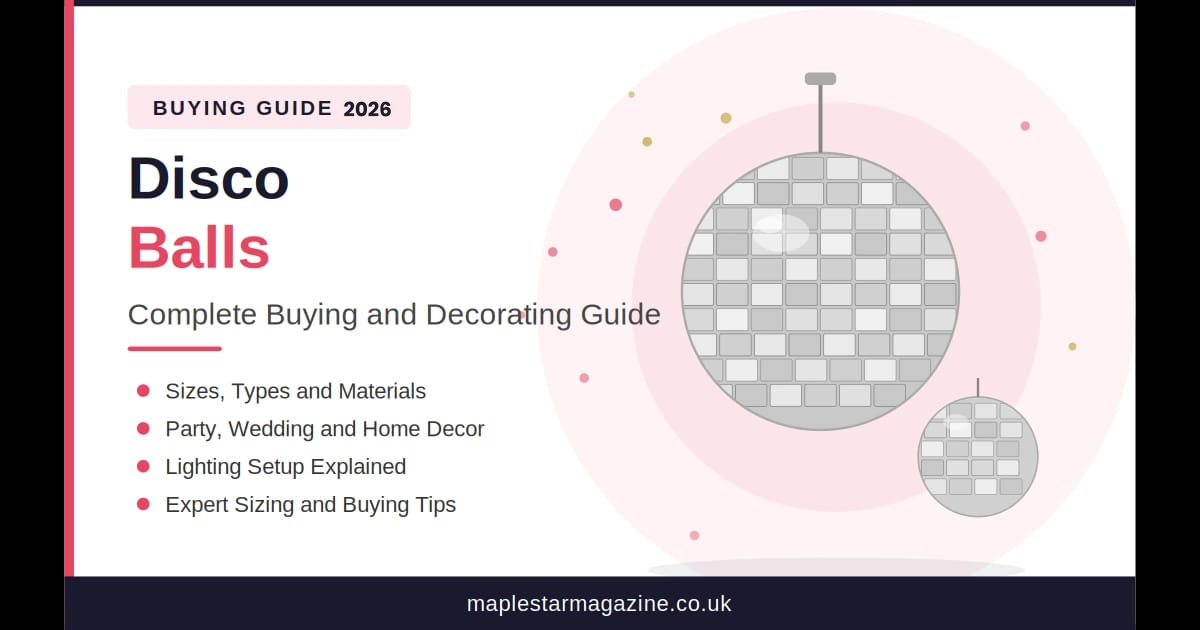
The classic hanging disco ball is a sphere covered in small mirrored glass or acrylic tiles arranged in a mosaic pattern. When a light source hits the surface, each tile acts as a tiny mirror, reflecting that beam outward in a different direction and creating hundreds of moving light dots across the room. These are the most recognizable type and come in standard sizes ranging from 4 inches up to 48 inches in diameter.
Hanging mirror balls are designed to be suspended from the ceiling using a motor, chain, or fixed hook. They work in almost every setting from a small apartment party to a large wedding reception venue, with size being the key variable that changes from one space to another.
LED Disco Ball Lights
LED disco ball lights are self-contained units that combine the reflective sphere with built-in colored LED light sources. Unlike a traditional mirror ball that needs a separate spotlight or pinspot to produce its effect, an LED disco ball generates its own light internally and projects colored patterns outward without any additional equipment.
These are significantly more affordable and easier to set up than a full mirror ball and motor package, which makes them popular for home use, bedroom setups, kids’ rooms, and casual party environments. Their weakness is that the effect is noticeably less dramatic than a real glass mirror ball hit with a dedicated spotlight, particularly in larger or brighter rooms.
Mini Disco Balls
Mini disco balls typically measure between 1 and 6 inches in diameter and are used primarily as decorative accents rather than functional light sources. They appear on Christmas trees as ornaments, in bowl centerpieces at event tables, hanging in clusters from doorways or canopy structures, and sitting on shelves or mantels as year-round decor objects.
Retail prices for mini disco balls range from $7 to $20 per piece, which makes them one of the most accessible entry points into the mirror ball aesthetic. Their small size means the reflective effect is limited to a small radius, but in a properly lit setting near a window or spotlight, even a 3-inch mirror ball will scatter interesting light across surrounding surfaces.
Large Disco Balls for Events and Venues
Large disco balls measuring 20 inches and above are built for event spaces, dance venues, clubs, and weddings where the ceiling height and room dimensions require significant reflective output to fill the space. A 20-inch glass mirror ball from a manufacturer like Omega Mirror Products weighs approximately 18 pounds, while a 36-inch ball reaches 75 pounds and requires a load-rated motor and verified ceiling anchor point before installation.
For wedding receptions and large party venues, the 20 to 24 inch range is the most commonly requested size, producing reflections that travel 30 to 50 feet across a room depending on the spotlight positioning and ceiling height.
Motorized Disco Balls
A motorized disco ball adds a rotation motor to any hanging mirror ball so it spins continuously, turning the static reflection pattern into moving, sweeping light. The motor speed determines how fast the light dots travel across the room’s surfaces: faster rotation creates a more energetic party atmosphere while slower rotation produces a more hypnotic, cinematic effect.
Motors are sold by weight rating and must be matched to the ball’s diameter and weight. A motor rated for a 12-inch ball will not safely support a 20-inch glass ball, which can weigh over 18 pounds. Always verify the motor’s listed capacity before purchasing separately.
Mushroom and Sculptural Disco Balls
The newest subcategory of mirror balls is the sculptural or novelty shape. Mushroom disco balls, melted disco ball sculptures, and custom shaped mirror objects emerged as a home decor trend around 2022 and have grown steadily since. These pieces use the same glass or acrylic mirrored tile construction as a traditional sphere but shaped into organic or unexpected forms that function as art objects even when no light is hitting them.
Prices for sculptural mirror pieces range from $38 for a small hanging planter design up to $290 or more for a handmade 31-inch mirror ball wall piece. The melted disco ball, made famous by Kelly Wearstler’s residential projects, sits at the higher end of that range and has become a recognized statement piece in contemporary American home interiors.
How to Size a Disco Ball for Your Space
Sizing is the most technically important decision in this category and the one most buyers get wrong. The mistake is almost always going too small rather than too large.
Size by Room Type and Ceiling Height
The right disco ball size depends on three factors: room dimensions, ceiling height, and the desired visual effect. A mirror ball that looks appropriate in a product photo can appear lost once it is hung in a real space, particularly one with high ceilings or significant ambient lighting.
| Ceiling Height | Recommended Ball Size | Best Use Case |
| Under 8 feet | 4 to 8 inches | Bedroom, closet, small studio, car |
| 8 to 10 feet | 8 to 12 inches | Living room, small party space, home bar |
| 10 to 14 feet | 12 to 16 inches | Larger living rooms, small event halls |
| 14 to 18 feet | 16 to 20 inches | Wedding reception halls, school gymnasiums |
| 18 feet and above | 20 to 24 inches or larger | Clubs, large venues, concert spaces |
The rule of thumb used by professional event lighting technicians is to hang the ball so its lowest point sits at least 8 feet from the floor for safety clearance, and to choose a diameter that is roughly 1 inch for every 2 feet of ceiling height as a starting point. A 10-foot ceiling works well with a 12-inch ball. A 20-foot ceiling generally needs at least a 20-inch ball to produce reflections that reach the floor and side walls meaningfully.
Glass Mirror Ball vs Foam or Plastic
Real glass mirror balls produce sharper, brighter, and more defined reflections than foam-based or acrylic alternatives because the glass surface reflects light with higher fidelity. For weddings, professional events, and permanent venue installations, glass is the preferred choice despite the added weight.
Foam-core mirror balls use a lightweight styrofoam sphere covered in glued-on mirror tiles. They are significantly lighter (a 24-inch foam ball weighs approximately 8.4 pounds compared to 19 pounds for a comparable foam-filled glass-tile version), more affordable, and less fragile. For home parties, portable DJ setups, and seasonal decorations, foam-based disco balls perform well and present far less risk if they are bumped or dropped.
How to Use Disco Balls for Parties, Weddings, and Home Decor
The use cases for mirror balls have expanded so broadly that the same product category now appears at a nightclub, a wedding reception, a child’s bedroom, and a high-end residential living room. Each setting requires a slightly different approach.
Disco Ball Party Decor
For birthday parties, New Year’s Eve celebrations, and Studio 54 themed events, the disco ball functions as both a lighting element and a focal point. A 12 to 16 inch hanging mirror ball paired with a rotating motor and two pinspot lights positioned at 45 degree angles from the ball will produce a full-room reflection effect. Colored gel filters over the pinspots add red, blue, or gold tones to the reflected dots, which significantly changes the party atmosphere compared to white light alone.
Table centerpiece disco balls in the 4 to 6 inch range are a popular secondary option for guest tables, particularly when positioned near candles or a small spotlight at table level. The close-range reflection from a small mirror ball creates an intimate sparkle effect at eye level that differs from the room-wide effect of a ceiling-hung piece.
Disco Ball Wedding Decor
Disco ball wedding decor has moved firmly into the mainstream. Wedding planning platforms in the United States report growing demand for mirror ball installations at receptions, particularly among couples seeking a retro or maximalist aesthetic that photographs dramatically. The most common wedding application is a large mirror ball (20 to 24 inches) suspended above the dance floor, often combined with a slow-rotation motor and warm white pinspots for an effect that feels glamorous rather than nightclub-aggressive.
Smaller mirror balls used as table number holders, photo booth props, and aisle decorations are a secondary trend within wedding disco ball decor. Because mirror balls are available in a wide range of retail prices from $7 for small ornamental pieces up to $150 or more for professional glass balls, incorporating them at multiple points across a reception space is achievable within most wedding decor budgets.
Disco Ball Home Decor
Using a disco ball as home decor rather than a temporary party prop is the trend that has surprised the decor industry most. Interior designers report that clients now request mirror balls as permanent or semi-permanent living room accent pieces, placing them on chairs, shelves, mantels, and window ledges where natural daylight creates a passive reflection effect during the day without any electricity required.
The key to making a disco ball work as home decor rather than looking like a leftover from a party is placement and scale. A single large-format mirror ball sitting directly on the floor in the corner of a living room with high ceilings functions as a sculptural object. A cluster of three to five mini disco balls arranged on a floating shelf functions as an accent grouping. Both approaches work better than a single small ball hanging from a ceiling hook in a room where it reads as underpowered.
Large Disco Ball for Events
For professional event applications like DJ setups, school dances, community events, and venue installations, the large disco ball for events needs to be treated as a technical installation rather than a simple decoration. This means selecting a motor with an appropriate weight rating, identifying a verified ceiling anchor point rated for the combined weight of the ball and motor, and adding a safety cable that will catch the ball if the primary mount fails.
Omega Mirror Products, one of the leading US manufacturers of handcrafted glass mirror balls, produces sizes from 12 inches at 5 pounds up to 48 inches at 105 pounds. Their larger balls require common carrier shipping rather than standard UPS delivery, which adds lead time to any event planning that includes a ball above 22 inches in diameter.
Lighting Setup: What Disco Balls Actually Need to Work
A disco ball without the right lighting produces almost no effect. This is the single most common setup mistake buyers make, and it explains why a large number of one and two star reviews for mirror ball products are actually complaints about insufficient lighting rather than the ball itself.
The basic requirement is a focused light source, typically called a pinspot or follow spot, aimed directly at the surface of the spinning ball. The pinspot beam hits the individual mirror tiles and each tile redirects that beam to a different angle, creating the signature scattered reflection pattern. A diffuse overhead light or a floodlight will not produce a strong disco effect because the light hits too many tiles simultaneously at similar angles, washing out the individual dot reflections.
For home setups, a basic PAR can spotlight or a dedicated mirror ball pinspot (available online for $30 to $80) aimed at the ball from below or at a 45 degree angle is sufficient for a 12 to 16 inch ball in a room with moderate ambient light. For weddings and larger events, two pinspots aimed from opposite sides of the ball produce a more complete coverage pattern with fewer dark spots in the reflection output.
Analysis: What the Data Actually Reveals About the Disco Ball Market
The most counterintuitive finding in the current disco ball market is not that demand is rising but how it is distributed. Traditional event and party supply demand shows predictable seasonal peaks around New Year’s Eve, Valentine’s Day, and back-to-school dance season. What has changed since 2022 is the growth of non-event demand: people buying mirror balls as permanent home decor with no specific party occasion in mind.
TikTok data shows casual photography as the primary usage scenario cited by buyers, with 83% of user-generated content featuring disco balls presenting the product in a domestic setting rather than a club or formal event. This represents a fundamental shift in buyer intent that the party supply retail channel has been slower to adapt to than the home decor and interior design sectors.
The price distribution also reveals something useful. Retail prices across the category range from $7 for ornamental mini balls to over $290 for designer sculptural pieces, with the highest search-to-purchase conversion rates occurring in the $25 to $80 range. This band covers most foam-core hanging balls in the 12 to 20 inch range and most LED disco ball light units. Buyers in this tier are typically making a first-time purchase, and the lower price reduces the risk of a sizing or placement mistake that a $150 professional glass ball purchase would amplify.
One practical insight that rarely appears in product guides: a disco ball that sits near a south-facing window during the day functions without any electrical input at all. Natural sunlight reflecting off a mirror ball surface creates a softer, slower version of the spotlit effect, particularly during late morning and afternoon hours when the sun’s angle is low enough to hit the ball at an acute angle. For buyers who want a passive decor effect without running a motor or spotlight, window placement is a genuinely effective solution that most product listings never mention.
6 Practical Recommendations for Buying Disco Balls in the USA
1. Size Up Rather Than Down for Any Active Lighting Application
If you are buying a disco ball to produce a real lighting effect rather than as a tabletop decoration, choose the next size up from whatever you initially considered. A ball that looks large in product photos often looks proportionally small once it is hung in a real room. For a standard living room with a 9-foot ceiling, a 12-inch ball is the minimum that produces a convincing effect. A 16-inch ball is better.
2. Buy a Motor and Spotlight Separately If You Want a Real Disco Effect
A disco ball hanging stationary with no motor and no spotlight will reflect ambient room light softly but will not produce the classic sweeping light-dot effect. If that effect is your goal, budget for a rotating motor rated above the ball’s weight and a dedicated pinspot or PAR can light positioned 3 to 6 feet from the ball. The total package cost for a home setup typically runs $60 to $150 beyond the ball itself.
3. Choose Glass for Permanent Venues and Foam for Portable or Home Use
Glass mirror balls produce superior reflections but weigh significantly more and break if dropped. Foam-core balls are lighter, more affordable, and more forgiving for setups where the ball will be moved, transported, or handled frequently. For a permanent dance venue or wedding hall installation, glass is the professional choice. For home parties and DJ setups where the ball travels regularly, foam-core is the practical one.
4. Verify Your Ceiling Anchor Point Before Any Ball Above 12 Inches
A 16-inch glass ball weighs approximately 10 pounds, and the motor adds additional load. A standard drywall ceiling hook rated for 15 pounds is not adequate for this combination in motion. For any ball above 12 inches, locate a ceiling joist, use a rated toggle bolt if joists are inaccessible, or use a freestanding mirror ball stand that takes the ceiling anchor question off the table entirely.
5. For Home Decor Use Without Lighting Equipment, Place Near a South Facing Window
Natural sunlight produces a surprisingly effective and energy-free disco effect when it hits a mirror ball at the right angle during late morning and early afternoon hours. Position a 6 to 10 inch ball on a shelf or on a stand within 3 feet of a south-facing window and it will scatter moving light dots across the room as the sun moves. No motor, no spotlight, no electrical setup required.
6. Budget $25 to $80 for a First Purchase
The $25 to $80 price range covers well-reviewed foam-core hanging balls from 12 to 20 inches, most LED disco ball light units, and small glass mirror balls in the 4 to 8 inch range. This band gives you enough product quality to evaluate what size and placement actually works in your specific space before committing to a premium glass or sculptural piece. Most buyers who end up with a $150 glass ball started with a $40 foam version and upgraded once they confirmed placement and size preferences in their own environment.
Frequently Asked Questions
Q: What size disco ball do I need for a home party?
For a standard living room or basement with a ceiling height of 8 to 10 feet, a 12-inch mirror ball is the minimum that produces a noticeable effect. A 16-inch ball is better in most home spaces. For rooms with 10 to 14 foot ceilings, choose 16 to 20 inches.
Q: Do disco balls need a motor?
No. A disco ball can hang stationary and still reflect light. However, without a rotating motor the reflection pattern stays fixed and the classic sweeping light effect does not appear. For a real party or dance atmosphere, a motor is strongly recommended.
Q: What is the difference between a glass and foam disco ball?
Glass mirror balls use real glass tiles and produce sharper, brighter reflections. They are heavier and more fragile. Foam-core balls use a styrofoam sphere covered in mirror tiles and are lighter, more affordable, and less likely to break. Glass is better for permanent professional installations. Foam-core is better for home and portable use.
Q: Can I use a disco ball for home decor without any lighting equipment?
Yes. Placing a mirror ball near a south-facing window allows natural sunlight to produce a passive reflection effect during morning and afternoon hours. It is softer than a spotlight effect but works without any electrical setup.
Q: How do I hang a disco ball safely?
For balls under 12 inches and under 5 pounds, a standard ceiling hook rated for at least twice the ball’s weight is sufficient. For larger balls, locate a ceiling joist or use a rated toggle bolt. For any glass ball above 16 inches, always add a secondary safety cable that will catch the ball if the primary mount fails.
Q: Are disco balls good for wedding decor?
Yes. Large mirror balls (20 to 24 inches) suspended above the dance floor with a slow-rotation motor and warm white pinspots are a growing wedding trend in the United States. Smaller mirror balls also work as table centerpieces, photo booth props, and aisle decorations.
Q: What lights work best with a disco ball?
A focused pinspot or PAR can spotlight aimed directly at the surface of the ball produces the strongest reflection effect. Diffuse overhead lighting or floodlights do not create a strong disco effect. For color, position the spotlight with a colored gel filter or use a dedicated RGB pinspot that allows color changes.
Conclusion
Disco balls have earned a place in American homes, events, and interior design that extends well beyond the 1970s associations the product carried for decades. Whether you are setting up for a New Year’s Eve party, decorating a wedding reception dance floor, or looking for a year-round sculptural accent piece for your living room, a mirror ball delivers a type of light and visual energy that very few other decor objects replicate.
The key takeaways from this guide:
- Size up for any active lighting application. A ball that looks right in photos often looks proportionally small in a real room
- A spotlight or pinspot and a motor are essential accessories if your goal is the classic moving-light effect, not just a decorative hanging piece
- Glass mirror balls suit permanent professional venues while foam-core balls suit home parties and portable DJ setups
- Natural sunlight near a south-facing window produces a passive disco ball effect with no equipment required
- The $25 to $80 price range covers most first purchases and gives you room to evaluate size and placement before committing to a premium piece
- Sculptural mirror ball objects including mushroom and melted designs now function as legitimate year-round home decor beyond their party origins
The disco ball market is growing because the product solves a real problem for a wide range of settings: it transforms light in a way that photographs well, feels festive without requiring much effort, and works across price points from $7 ornaments to $290 designer sculptures. Use the size guide and recommendations above to find the version that fits your specific space and use case.

The Maple Star Magazine editorial team is responsible for the accuracy, structure, and publishing standards that every article on this site is held to. This includes verifying sources before publication, maintaining consistency across our Travel, Technology, Lifestyle and revisiting published guides as facts, pricing, or industry standards change. Content published under this byline reflects collaborative editorial work rather than a single author's individual reporting.