








Introduction
Most people buy a collapsible wagon once and regret it not because the product failed them but because they picked the wrong one. The global folding wagon market reached $1.54 billion in 2024 and is growing at a compound annual growth rate of 7.2% through 2033. That number reflects real demand from families, campers, gardeners and event-goers across the United States who want a smarter way to move gear. The trouble is that the sheer number of options makes it genuinely difficult to know what you actually need.
This guide cuts through the noise. Whether you are heading to the beach, setting up at a farmers market, hauling gardening supplies across the yard or navigating a crowded sports complex with three kids in tow, you will find practical answers here. We cover weight ratings, wheel types, frame materials and the features that actually matter once the wagon is outside and fully loaded. By the end, you will know exactly what to look for in a collapsible wagon before you spend a dollar. At Maplestar Magazine, we cut through the clutter so every guide you read here is backed by real data and practical insight not guesswork
What a Collapsible Wagon Actually Is (and Why It Is Not Just a Cart)
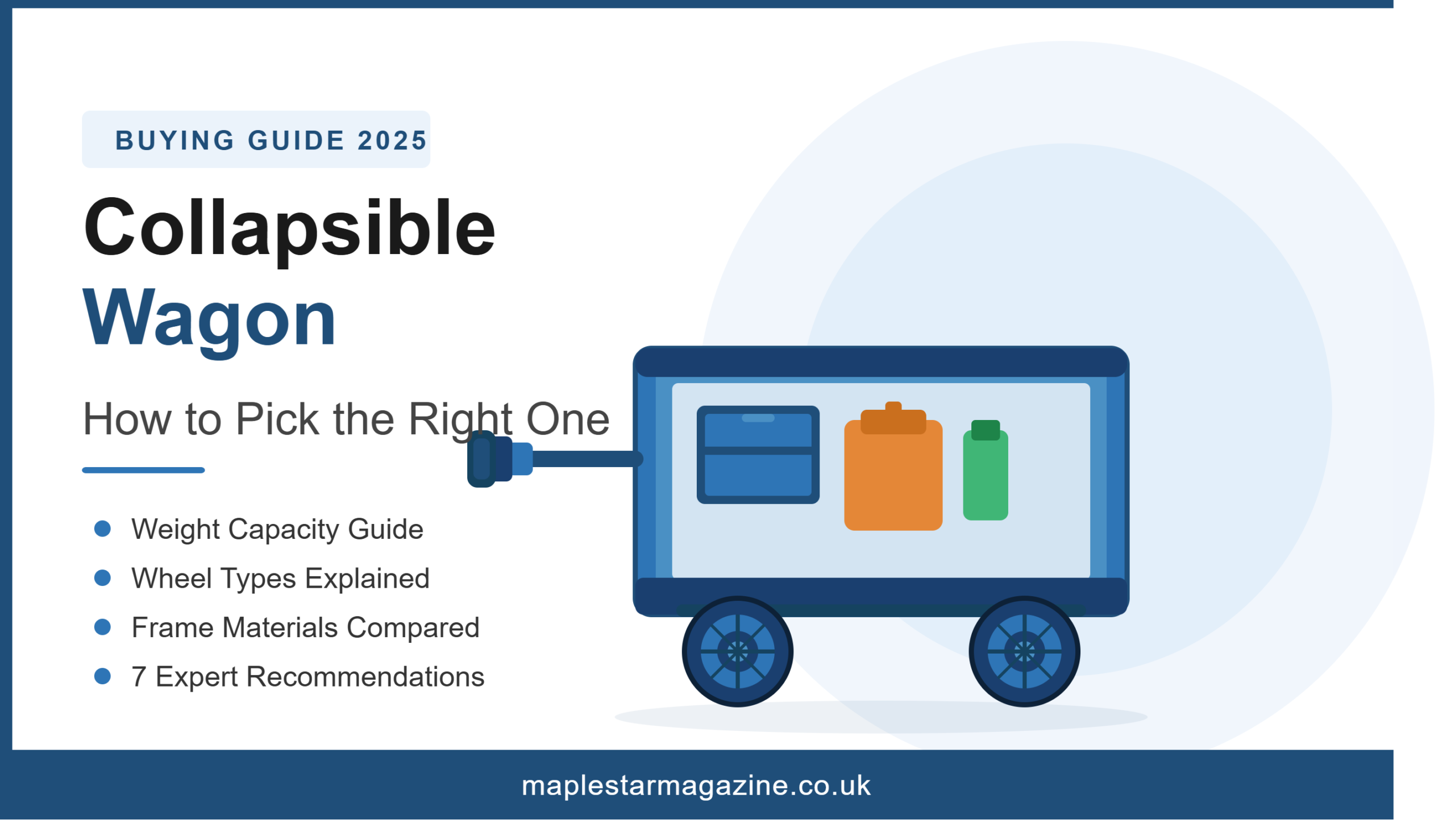
A collapsible wagon is a soft-sided, fabric-lined cart built on a scissor or slat frame that folds flat for storage and transport. Unlike a rigid utility cart that lives permanently in a garage or garden, a folding wagon travels. It fits in a car trunk, stands in a closet and opens in seconds without tools.
The distinction matters because many shoppers compare folding wagons with hand trucks or rigid garden carts. Those are different tools for different jobs. A hand truck is designed for vertical stacking and tight indoor spaces. A rigid cart is meant to stay outdoors and handles heavier static loads with less mobility. A collapsible wagon sits between them: it is portable, it rolls on multiple wheels and it works across varied terrain.
In the United States, the most common applications include:
- Beach outings where gear needs to cross soft sand
- Camping trips where the walk from the parking area to the site can stretch several hundred yards
- Tailgating setups at stadiums and arenas
- Farmers market shopping where multiple bags add up quickly
- Backyard gardening and landscaping
- Sports events where parents carry equipment for multiple children
North America accounted for approximately 38% of global folding wagon revenue in 2024, with the United States generating the largest share of that figure. The demand is real and growing. So is the variation in product quality.
The 4 Types of Collapsible Wagons and What Each One Does Best
Not every collapsible wagon is built the same way. Understanding the main categories saves you from buying a lightweight leisure wagon when you need something that handles 300 pounds of mulch.
Standard Folding Wagons (Everyday Use)
Standard folding wagons are the most common type you will find at big-box retailers and on Amazon. They typically feature a steel or aluminum frame, a 600D Oxford fabric or polyester liner and four fixed or semi-swiveling wheels. Weight capacities in this category generally run between 150 and 220 pounds.
These work well for casual outings: park days, picnics, neighborhood sports and grocery runs from the car to the front door. They are usually the lightest of the four types, often weighing between 16 and 24 pounds empty. The Mac Sports Heavy Duty Collapsible Wagon, for example, handles 150 pounds of cargo and folds to just 8 inches thick thin enough to slide into most car trunks upright.
If your use case is mostly flat terrain and light to moderate loads, a standard folding wagon will serve you well for years.
Heavy Duty Collapsible Wagons (High Loads and Rough Ground)
Heavy duty models use reinforced steel frames with thicker gauge tubing, wider axles and all-terrain wheels rated for grass, gravel, packed dirt and pavement. Weight capacities start around 300 pounds and can reach as high as 460 pounds on models like the Originsure Collapsible Wagon, which also features a 600D Oxford waterproof liner and a frame that is 20% thicker than standard models.
These wagons weigh more typically 25 to 40 pounds empty so portability is a trade-off. You gain significant hauling strength in exchange. For gardeners moving bags of soil or bark chips or for campers carrying cooking gear, a cooler, chairs and a tent in a single load, the added weight is worth it.
Look for wide wheelbase dimensions on these models. A wider stance reduces tipping risk when the load shifts to one side on uneven ground.
Beach and All-Terrain Wagons (Soft Sand and Varied Surfaces)
A standard wagon wheel sinks in dry sand. It is one of the most common complaints in product reviews. Beach wagons address this with oversized balloon tires or wide-track pneumatic wheels that distribute weight across a larger footprint.
Wheel diameter matters more than most buyers realize. Wheels measuring 10 to 12 inches in diameter clear obstacles more easily and roll through sand without bogging down. The Veer Cruiser, for instance, uses 12-inch rear wheels and 8-inch front wheels, which allowed testers to move across most terrain without difficulty. Beach wagons can cost significantly more than standard models some premium options exceed $400 but for families who visit the beach regularly, the performance difference is immediately noticeable.
Specialty Wagons (Children, Pets and Double-Decker Designs)
Specialty wagons include child stroller-wagon hybrids with harness systems, pet wagons with ventilated mesh panels and double-decker designs that add a lower storage shelf beneath the main cargo bed. The double-decker category is particularly popular among tailgaters who need to separate food items from coolers and equipment.
One important note: standard collapsible wagons are not designed with child safety features. If you plan to transport a child in a wagon, use a model specifically engineered for that purpose one with a harness, stable footwell and low center of gravity.
Key Specifications That Separate a Good Wagon from a Frustrating One
Knowing the categories is step one. Knowing which numbers to check is what actually determines whether your purchase holds up through real use.
Weight Capacity (Static vs Dynamic)
Weight ratings on wagons are almost always listed as static capacity the load the wagon can hold when stationary. Dynamic capacity (what the wagon can carry while moving) is typically 20% to 25% lower. A wagon rated at 220 pounds static can safely carry around 176 pounds while rolling.
For most recreational use, a capacity between 150 and 300 pounds covers virtually every scenario. Camping equipment, even when packed generously, rarely exceeds 155 pounds inside a standard-sized wagon bed. Where you need to think beyond 300 pounds is in gardening or landscaping applications where heavy materials like wet soil, gravel or stone are involved.
Wheel Size, Type and Axle Configuration
Wheel size is one of the most underestimated specifications. Here is a practical breakdown:
| Wheel Diameter | Best Surface | Example Use |
| 4-6 inches | Smooth pavement only | Indoor use, event halls |
| 6-8 inches | Grass and light gravel | Parks, backyard, paved trails |
| 10-12 inches | Sand, gravel, dirt, uneven terrain | Beach, camping, hiking paths |
| 12+ inches (pneumatic) | Soft sand, mud, rough ground | Heavy-duty outdoor use |
Front swivel wheels add maneuverability in tight spaces. If you are navigating crowded stadium walkways or weaving through a farmers market, front-swivel models turn significantly more easily than four fixed-wheel designs. All-terrain tread on the tire surface adds grip on loose or wet ground.
Folded Dimensions and Storage Footprint
This is the specification most buyers overlook until after delivery day. A wagon that folds to 8 inches thick fits vertically into a standard car trunk or stands in a narrow closet. A wagon that collapses to 12 to 15 inches may not fit where you expected it to.
Check three measurements: folded height, folded width and folded depth. Also check whether the wagon can stand upright when folded or whether it lies flat. Upright storage is significantly easier in tight spaces.
The Originsure model mentioned earlier folds to just 1.36 cubic feet despite having a 7.69 cubic foot cargo volume when open a compression ratio that makes practical storage realistic.
Frame Material and Liner Durability
Steel frames are heavier and stronger. Aluminum frames are lighter and more rust resistant. For wagons stored outdoors part of the time or used near saltwater, aluminum or powder-coated steel is the better choice.
For the liner, 600D Oxford fabric is the industry benchmark for durability. It resists abrasion and handles moisture reasonably well, though it is not fully waterproof without a coating. Cheaper models use thinner 420D or 210D fabric, which shows wear much faster under regular use.
Look for reinforced stitching at the corners and along the base seam. That is where stress concentrates when the wagon is fully loaded.
What the Numbers Actually Tell You: An Honest Look at the Market
Here is something the marketing copy rarely tells you: the difference between a $60 collapsible wagon and a $160 one is rarely about the weight rating printed on the box. Both might say 150 pounds. The real difference shows up in the frame thickness, the wheel bearings, the quality of the folding mechanism and how long the liner holds up before the seams start pulling.
Search volumes for heavy duty foldable utility wagons increased by 190.3% between January and June 2026, peaking in July. That surge reflects a pattern: buyers searching more carefully before purchasing, often because a cheaper wagon failed them. The most common negative feedback in consumer reviews across tested models points to three recurring issues: hard folding mechanisms, wheel alignment problems after extended use and liner fraying at stress points.
What does that mean for you? It means the folding mechanism deserves hands-on evaluation if possible. A well-designed scissor frame should open and close in under 10 seconds with moderate hand pressure. If the pull tab requires significant force or two hands consistently, the mechanism is either poorly designed or already wearing.
The telescoping handle is another point of real-world failure. Handles that extend to only 38 or 40 inches force taller adults to lean forward slightly, adding fatigue over longer distances. Look for handles that reach at least 42 to 44 inches fully extended and lock firmly without play or wobble.
One counterintuitive finding from real-world testing: volume capacity is often more useful than weight capacity for predicting how useful a wagon will be. A typical load of camping gear sleeping bags, a small cooler, cooking equipment, folding chairs is bulky enough to fill most standard wagons before the weight limit is even approached. A wagon with 5.5 to 7 cubic feet of interior volume handles those loads more usefully than a smaller wagon with a higher weight rating.
7 Practical Recommendations for Buying a Collapsible Wagon in the USA
1. Match Wheel Size to Your Primary Surface
Do not buy a beach wagon if you mainly use it on paved surfaces and do not buy a small-wheel standard wagon if sand or gravel is part of your regular route. Before purchasing, write down the three main surfaces the wagon will travel across and verify the listed wheel size handles all three.
2. Confirm the Folded Dimensions Against Your Storage Space
Measure the space in your car trunk and your intended storage area before ordering. Note whether the wagon stores vertically or horizontally when folded and confirm that orientation fits your available space. This step takes two minutes and eliminates the most common post-purchase frustration.
3. Check the Frame Gauge, Not Just the Material
Both steel and aluminum can be strong or flimsy depending on tube thickness. Look for product listings that specify the frame gauge (lower gauge numbers mean thicker tubing) or that mention reinforced crossbars. If a listing does not mention frame thickness at all, treat that as a yellow flag.
4. Prioritize 600D Oxford Fabric for the Liner
If the product listing describes the liner as polyester without specifying a denier rating, contact the seller or check third-party reviews before purchasing. The 600D rating is a genuine indicator of liner durability and is available across price points from roughly $80 upward.
5. Test or Review the Handle Ergonomics Before Buying
For adults over 5 feet 8 inches, a telescoping handle that extends to at least 42 inches makes a noticeable difference on longer hauls. Read reviews specifically from tall users or check the extended handle measurement in the product specifications. Many budget models max out at 38 inches, which causes an uncomfortable forward lean.
6. Look for Swivel Front Wheels If You Use Tight Spaces
If your main environments include crowded markets, narrow garden paths, busy sports complexes or indoor event halls, front-swivel wheels are worth the slight price premium. They reduce the physical effort of changing direction under load by a meaningful amount.
7. Budget $120 to $180 for a Wagon That Will Last Several Seasons
Entry-level wagons under $70 can work for occasional use but the frame welds, wheel bearings and liner seams are built to tighter tolerances that show wear faster. The $120 to $180 price band consistently produces models with adequate frame strength, decent liner quality and reliable folding mechanisms. Above $200, you are generally paying for specialty features child transport systems, premium all-terrain wheels, or modular accessory compatibility rather than baseline durability.
Frequently Asked Questions
Q: What is the average weight capacity of a collapsible wagon?
Most standard models handle between 150 and 220 pounds. Heavy duty models start at 300 pounds and can reach 440 to 460 pounds. For most recreational and household uses, 150 to 220 pounds is more than sufficient.
Q: Can I use a collapsible wagon on the beach?
Yes but only if the wagon has large-diameter wheels at least 10 inches with wide or balloon-style tires. Standard wagon wheels with 6-inch diameter tires sink immediately in dry sand and become very difficult to pull.
Q: How thin does a collapsible wagon fold?
Quality models fold to between 7 and 10 inches thick. Some compact designs reach as thin as 6 inches. Larger heavy-duty wagons may fold to 12 to 15 inches. Always check the folded depth measurement in the product listing.
Q: Is a collapsible wagon safe for carrying a child?
Standard collapsible wagons are not designed for child transport. They lack harness systems and safety-rated footwells. If you need to carry a child, purchase a stroller-wagon hybrid specifically engineered and tested for that purpose.
Q: How do I clean a collapsible wagon liner?
Most 600D Oxford fabric liners can be wiped down with a damp cloth and mild soap. Some models have removable liners that are machine washable on a gentle cycle. Avoid bleach, which degrades the fabric coating over time.
Q: What is the difference between a static and dynamic weight rating?
Static rating is the maximum load when the wagon is stationary. Dynamic rating applies when the wagon is in motion and is typically 20 to 25% lower than the static figure. A wagon rated at 300 pounds static should be loaded to no more than roughly 225 pounds when rolling.
Q: Do collapsible wagons require assembly?
Most standard models require only attaching the wheels, which clip into place in under five minutes without tools. Some heavier utility wagons require more assembly steps. Check the listing for setup time estimates and watch any available manufacturer videos before purchasing.
Conclusion
A collapsible wagon is one of those products that quietly changes how you approach everyday logistics not dramatically but consistently. Fewer trips from the car to the campsite. Less strain carrying equipment across the park. More gear in one organized load instead of three uncomfortable armfuls.
The key takeaways from everything covered here:
- Match wheel size to your primary surface type before any other consideration
- Check folded dimensions against your actual storage space before ordering
- Prioritize 600D Oxford fabric and stated frame gauge over price alone
- Budget between $120 and $180 for a wagon that holds up through regular seasonal use
- Reserve specialty wagons beach, child transport, double-decker for the specific use cases they are built for
The collapsible wagon market is growing because the product genuinely solves a real problem for a wide range of people. What that means for you as a buyer is a large selection and significant quality variation. Use the specification benchmarks in this guide and you will have what you need to cut through the marketing language and pick a wagon that actually works.

The Maple Star Magazine editorial team is responsible for the accuracy, structure, and publishing standards that every article on this site is held to. This includes verifying sources before publication, maintaining consistency across our Travel, Technology, Lifestyle and revisiting published guides as facts, pricing, or industry standards change. Content published under this byline reflects collaborative editorial work rather than a single author's individual reporting.